#include <algorithm>
#include <memory>
#include "plotter.hpp"
template<class T, size_t DOFs>
class MinimalDofsVector {
std::unique_ptr<T[]> data_;
size_t n_ = 0;
public:
MinimalDofsVector() { }
MinimalDofsVector(std::initializer_list<T> a): data_(new T[a.size()]), n_(a.size()) {
std::copy_n(a.begin(), n_, data_.get());
}
MinimalDofsVector(const MinimalDofsVector& o): data_(o.n_ ? new T[o.n_] : nullptr), n_(o.n_) {
std::copy_n(o.data_.get(), n_, data_.get());
}
MinimalDofsVector& operator=(MinimalDofsVector o) {
std::swap(data_, o.data_);
std::swap(n_, o.n_);
return *this;
}
T* data() { return data_.get(); }
const T* data() const { return data_.get(); }
T operator[](size_t i) const { return data_[i]; }
T& operator[](size_t i) { return data_[i]; }
size_t size() const { return n_; }
void resize(size_t n) {
std::unique_ptr<T[]> fresh { new T[n] };
std::copy_n(data_.get(), std::min(n, n_), fresh.get());
std::swap(data_, fresh);
n_ = n;
}
bool operator==(const MinimalDofsVector<T, DOFs>& rhs) const {
for (size_t dof = 0; dof < n_; ++dof) {
if (data_[dof] != rhs[dof]) {
return false;
}
}
return true;
}
};
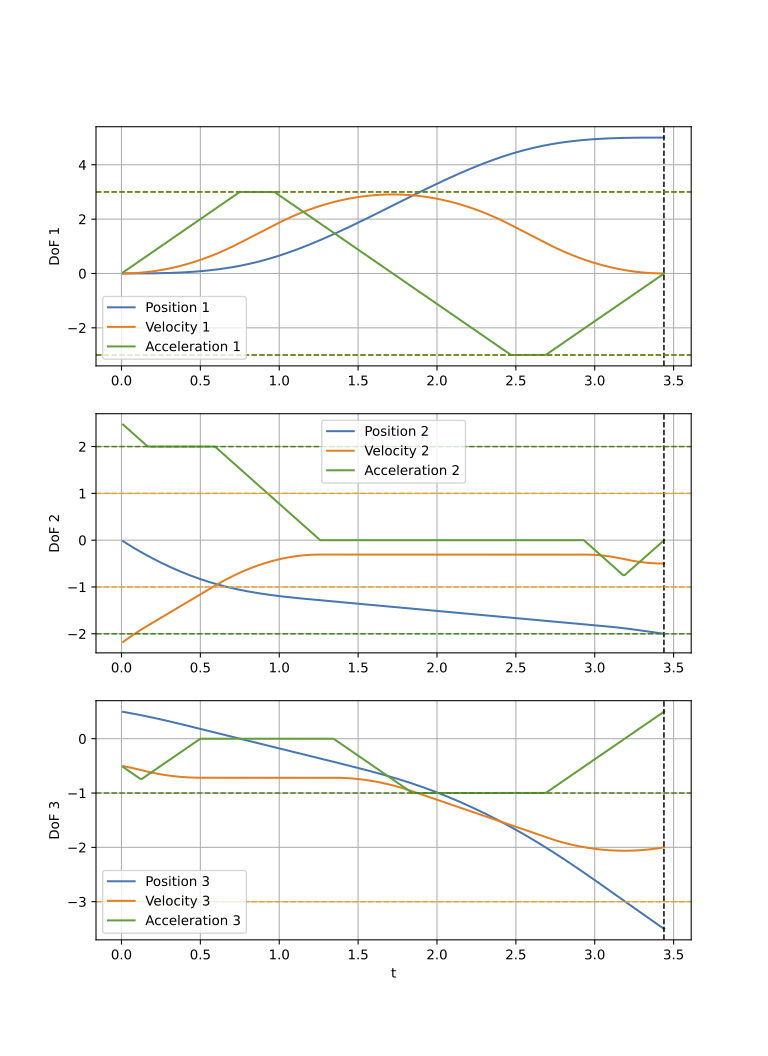
input.current_position = {0.0, 0.0, 0.5};
input.current_velocity = {0.0, -2.2, -0.5};
input.current_acceleration = {0.0, 2.5, -0.5};
input.target_position = {5.0, -2.0, -3.5};
input.target_velocity = {0.0, -0.5, -2.0};
input.target_acceleration = {0.0, 0.0, 0.5};
input.max_velocity = {3.0, 1.0, 3.0};
input.max_acceleration = {3.0, 2.0, 1.0};
input.max_jerk = {4.0, 3.0, 2.0};
std::cout << "t | position" << std::endl;
}
std::cout <<
"Trajectory duration: " <<
output.trajectory.get_duration() <<
" [s]." << std::endl;
}
Main interface for the Ruckig algorithm.
Definition ruckig.hpp:28